




























We’re delighted to welcome Esther Allen, professional nanny and founder of Potty Pros Academy. With over 15 years of hands-on experience supporting families through toddlerhood, Esther has helped countless parents navigate the emotional and practical challenges of early potty training with confidence and calm.
In this guest post, Esther shares her gentle, developmentally aligned approach to potty training, explaining how small, pressure-free changes can make a big difference to both children and parents. Her work through Potty Pros Academy is all about meeting toddlers where they are, without rushing or unrealistic expectations.
If you’re thinking about starting potty training or feeling unsure about the “right time,” Esther’s expert guidance will help you feel supported, reassured, and ready to take those first steps in a way that truly works for your family.
Potty training and sleep are two of the biggest areas of change in early childhood, and both can feel emotionally loaded for parents. When changes in sleep appear around the same time as toilet learning begins, it’s understandable to wonder whether the two are connected and whether one is disrupting the other.
The reality is more reassuring than many parents expect. While potty training and sleep can overlap, this doesn’t mean that learning to use the toilet causes problems with sleep. However, understanding the physical, emotional and developmental factors that are involved can help families approach both potty training and sleep with confidence.
How Potty Training Can Impact Sleep
Potty training can coincide with temporary changes in sleep for some children, particularly as they become more aware of their bodies and adjust to new routines.
Physically, potty training involves increased awareness of bodily sensations. For some children, recognising the feeling of a full bladder or bowel is new, and this awareness can occasionally surface during lighter stages of sleep. This might look like brief stirring or early morning waking, particularly in the early weeks of learning.
Emotionally, learning to use the toilet is a huge new skill for young children. Even when it is introduced gently, potty training represents independence and often brings changes to their usual daily routine. Young children often process these new experiences during sleep, and this can sometimes lead to lighter sleep or increased need for reassurance during the night, not because something is wrong, but because of all of the learning taking place during the day.
Developmentally, potty training rarely happens in isolation. It often coincides with other milestones such as language development, stronger preferences, increased independence, or shifts in routine. These developmental changes are well known to influence sleep on their own, regardless of toilet training.
Understanding all of these factors is key, so that if sleep changes do occur, you know that they are usually part of a bigger developmental picture rather always as a direct result of the potty training itself.
Common Sleep Changes Parents Might Notice
Some families notice no change in sleep at all during potty training. Others experience subtle, temporary changes that can naturally settle with time.
Common changes may include:
-
Taking longer to settle at bedtime
-
Occasional night waking or early waking due to the feeling of a full bladder or bowel
-
Increased sensitivity to routine changes
-
A desire for more comfort or reassurance at bedtime or during the night
These changes are typically short-lived and often settle naturally, they often resolve as the child becomes more confident and familiar with the new routines around using the toilet.
It’s also helpful to understand what parents typically do not see when potty training is approached calmly and without pressure:
-
Long-term sleep regression or resistance to sleep
-
Ongoing night waking caused by toileting
-
Heightened bedtime anxiety
When potty training is gradual and supportive, sleep is often not hugely disrupted and most disturbances are minor and brief.
Night-Time Dryness and Sleep
One of the most common concerns parents have is when and how a child will become dry at night. It’s important to understand that night-time dryness is largely biological and develops independently of daytime potty training.
Children do not need to wake to use the toilet unless they naturally do so. Waking a child to “try for a wee” can actually disrupt sleep and create unnecessary pressure. Protecting sleep remains the priority, and nappies or night-time protection can continue without affecting daytime potty training progress.
When night-time readiness does develop, it often happens quietly and without intervention.
Practical Tips for Supporting Sleep During Potty Training
The most effective way to support sleep during potty training is through consistent calm routines.
1. Keep to your normal bedtime routines.
If using the toilet is part of the evening routine, it should feel relaxed and calm. A simple, pressure-free toilet sit before bed is enough - without expectation or insistence that they must do wee before getting into bed.
2. Avoid pressure around night-time toileting.
Reassure children that until their body is ready to no longer need a night time nappy that it’s okay to continue to use a nappy whilst they sleep. Remember there is no need to rush night-time dryness or introduce new expectations overnight. Most children naturally become dry overnight before the age of 5 and it is very normal to still need a nappy for sleep before then.
3. Maintain a gradual, steady approach.
Potty training works best when it’s viewed as a learning phase rather than rushing to meet a strict 3 day deadline. When children feel supported rather than rushed, both toileting and sleep tend to settle naturally.
Supporting Sleep as Night-Time Dryness Develops
When children are beginning to wake in the morning 3-4 times a week with a dry nappy this is a sign they are developmentally ready to try removing the overnight nappy. This typically happens between the ages of three and five.
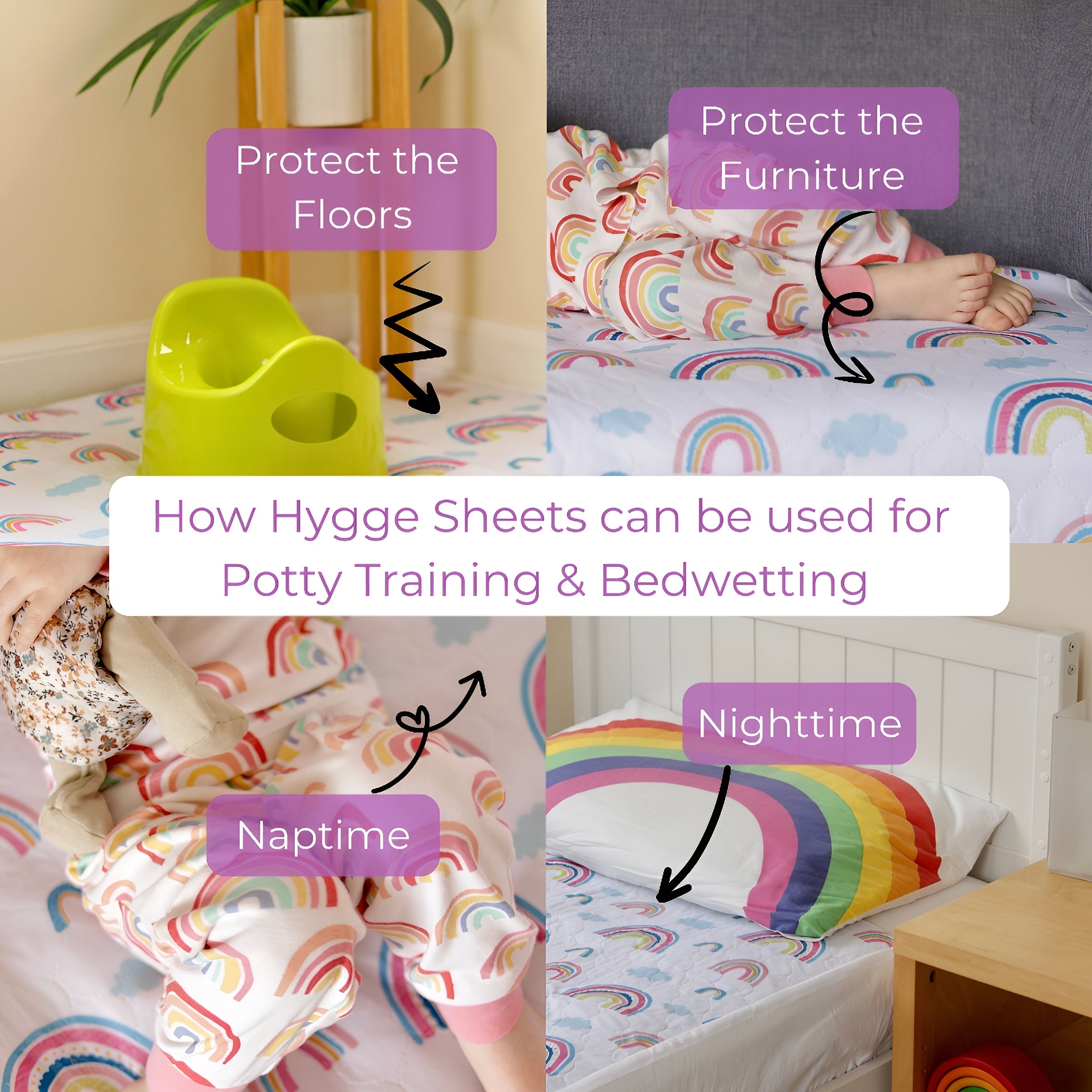
At this stage, using waterproof bed sheets, can offer reassurance during this transition by protecting the mattress while allowing children to sleep comfortably and without disruption. Knowing that the bed is protected can reduce anxiety for both children and parents, supporting a calmer night-time experience as overnight dryness develops.
When to Seek Additional Support
While temporary sleep changes are normal, there are situations where extra guidance can be helpful.
Parents may wish to seek support if:
-
Sleep disruptions persist for several weeks without improvement
-
A child shows distress or anxiety linked to toileting
-
Night waking is frequent and accompanied by discomfort or pain
-
Constipation, withholding, or painful bowel movements are present
-
Parents feel uncertain or overwhelmed by the process
Support from a health visitor, early years professional, or continence specialist can help identify underlying factors and provide reassurance tailored to the child’s development.
Potty training does not always disrupt sleep. When introduced gently and in line with a child’s development, it can integrate seamlessly into family life, including bedtime routines and overnight sleep.
With calm guidance, predictable routines and a supportive sleep environment, children can navigate both milestones feeling safe, secure and well rested.