




























Bedwetting setbacks can feel discouraging not just for children, but for parents too. After weeks or even months of dry nights, a wet bed can knock a child’s confidence and leave parents wondering what went wrong. The good news is that bedwetting setbacks are extremely common, usually temporary, and very manageable when handled with the right emotional support.
This blog explores how parents can help protect their child’s self-esteem, rebuild confidence after an accident, and move forward calmly without turning setbacks into stress points.
Understanding Bedwetting Setbacks
One of the most important things to understand is that bedwetting is not a behaviour problem. It is a developmental process that unfolds at different speeds for different children. Even children who are mostly dry at night can experience setbacks due to growth spurts, deep sleep patterns, illness, fatigue, or emotional changes such as starting school or dealing with new routines.
When parents view a setback as a normal part of development rather than a failure, children are far more likely to feel safe and supported. This mindset shift alone can significantly reduce shame and anxiety around accidents. We have written expert support and guidance in our “What Happens After Your Child is Dry At Night?” article if you need further support.
How Your Reaction Shapes Their Confidence
Children often internalise how adults respond, not only to accidents, but moments of joy, sadness and stress. Although this can often seem hard in the moment, having a calm, neutral reaction sends the message that they are safe and not in trouble. While visible frustration or disappointment can quickly damage confidence, even if no words are spoken.
After an accident, reassurance matters more than explanations. Simple statements such as, “That’s okay, bladders take time to learn,” help children understand that bedwetting is not something they are doing wrong. Avoiding lectures, consequences, or repeated questioning protects their self-esteem during a vulnerable moment.
Helping Children Feel Capable, Not Helpless
Confidence grows when children feel involved rather than powerless. Allowing them to take small, age-appropriate steps in the toileting process can help restore a sense of control. This might include creating a caddy in the bathroom when they need the toilet. Or perhaps helping make the bed with their waterproof bed protector, or choosing a nice new set of pajamas. The goal is not to assign blame or responsibility, but to help children feel capable and included. When handled gently, these moments reinforce resilience rather than embarrassment.
Shifting the Focus Away From Dry Nights Alone
Being dry at night is a completely separate developmental milestone to daytime potty training. Dry nights are not entirely within a child’s control, so focusing too heavily on outcomes can increase pressure and anxiety. Instead, building confidence comes from recognising effort and healthy habits. However, many perfectly normal children still wet at night by 5 years old, at that stage, an assessment is recommended. There is some new UK guidance around potty training which could help with further clarity on this.
Praising routines such as using the toilet before bed, following a calm bedtime routine, or drinking fluids earlier in the day helps children feel successful regardless of the night’s outcome. This approach reinforces positive behaviours without tying confidence solely to dryness.
Creating a Calm and Reassuring Bedtime Environment
Stress and anxiety can make bedwetting more likely, which is why keeping bedtime calm and predictable is so important. A relaxed routine, free from last-minute reminders or pressure to “stay dry,” helps children settle both emotionally and physically. Small environmental comforts can also make a big difference. For some children, a soft nightlight provides reassurance by reducing fear of the dark and making it easier to get up and find the toilet independently, without feeling anxious or disoriented.
Ending the day with connection whether through reading together, chatting, or cuddling reassures children that they are valued and supported, regardless of accidents. If a setback occurs, handling it quietly and matter of fact prevents it from becoming emotionally charged.
Normalising Bedwetting to Reduce Shame
Many children believe they are the only ones struggling with bedwetting, which can intensify feelings of embarrassment and self-doubt. Gently normalising the experience plays a big role in reducing this isolation and protecting confidence. When children understand that bedwetting is common and temporary, it helps them separate who they are from what their body is still learning to do.
It can be reassuring to share simple, age-appropriate facts. Such as around 30% of four-year-olds are not dry at night, and around 15% of five-year-olds still experience bedwetting. In practical terms, this means that in a typical Reception class of 30 children, there are likely to be at least 10 children who are not dry at night. Knowing they are not alone can be a huge relief for children and parents. Further support around school, advice and guidance can be found here. Sharing that many adults and yourself had accidents when they were younger can also be comforting, as it reinforces the idea that bedwetting is something children grow out of, not something that defines them.
Stories and books are another gentle and effective way to open up these conversations. Reading together allows children to see their experiences reflected in a safe, non-judgemental way. Our book, Keeping Bed Dry: A Story to Support Night-Time Potty Training, is designed to do exactly this helping children feel understood, reassured, and supported while encouraging calm conversations around nighttime potty training. When bedwetting is talked about openly and kindly, children are far more likely to feel normal, supported, and confident even on the nights that don’t go to plan.
Reducing the Stress Around Changing
One often overlooked factor in confidence is how disruptive accidents feel at night. When changing clothes and bedding are stressful, loud, or time-consuming, children may associate accidents with embarrassment, panic, or feeling like they have caused a problem. Over time, this emotional response can increase anxiety around bedtime and setbacks.
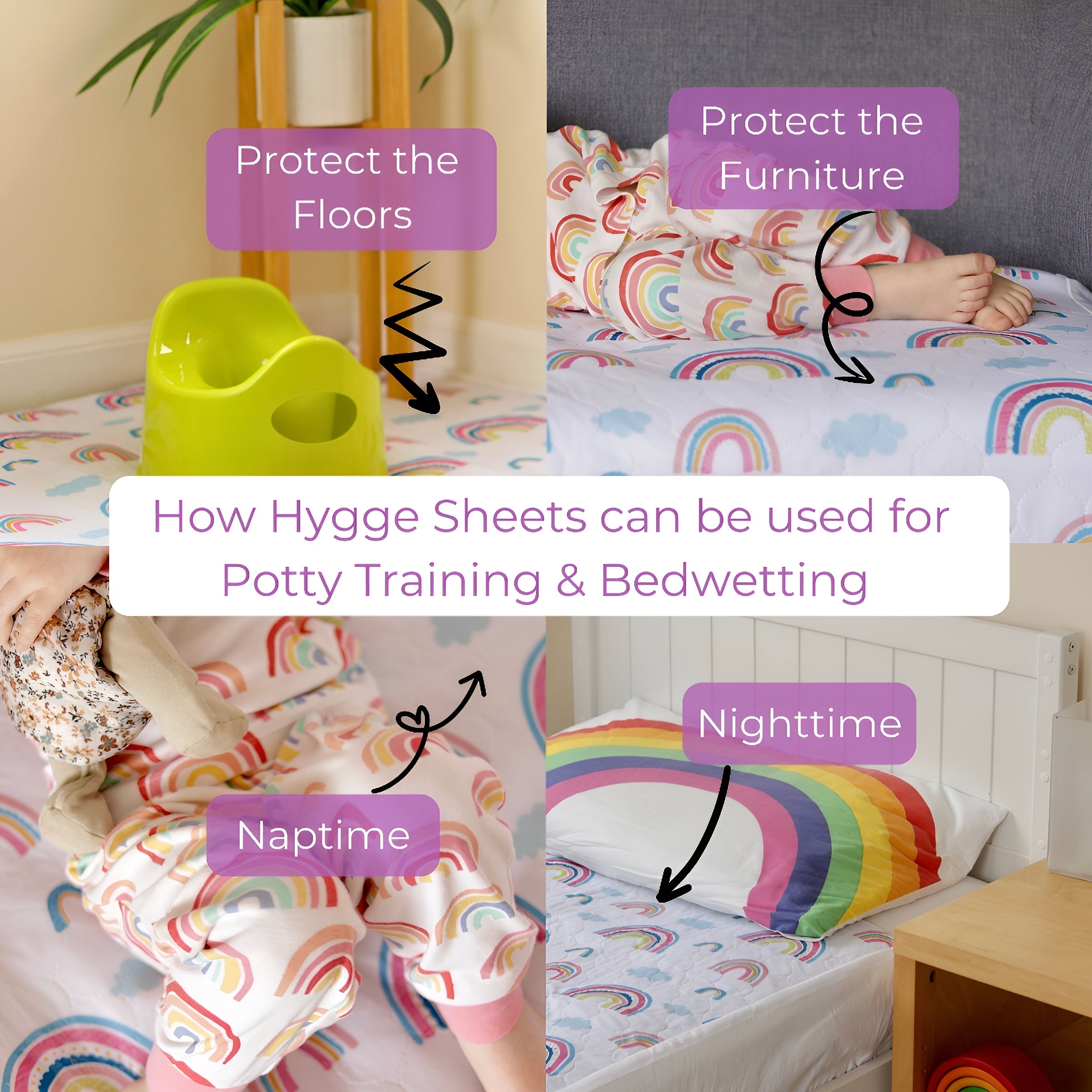
Practical solutions can make a significant difference. Waterproof bedding or a coverless duvet that looks and feels like normal allows beds to be reset quickly without layers of noisy plastic. Having spare pyjamas and bedding ready nearby reduces disruption and helps keep the process calm and low-key. For some families, a soft nightlight also helps by allowing children and parents to manage changes without fully waking or disorientating the child.
When parents are prepared and respond quietly, accidents become easier to move past. The focus stays on comfort, allowing everyone to return to sleep with minimal fuss and far less emotional weight attached to the experience.
Knowing When to Pause and Reset
If setbacks begin happening frequently, it may be a sign that it’s time to pause rather than push forward. Taking a short break from active nighttime potty training can relieve pressure and allow confidence to rebuild naturally. Progress with bedwetting is rarely linear, and pauses are often part of how children ultimately succeed.
Rather than measuring success by dry sheets alone, it can be helpful to look at the bigger picture, a child who feels safe asking for help, who isn’t ashamed of accidents, and who trusts that their parents are on their side. These emotional foundations matter just as much as physical readiness.