

























Bedwetting is still one of the most common concerns during and after potty training. It disrupts sleep patterns and often requires changing bedding in the middle of the night, leaving both parents and children exhausted. In an attempt to prevent bedwetting, some parents wake their child and take them to the toilet once or several times during the night. However, while this may offer a short-term advantage, it’s not an effective long-term solution for bedwetting. Read on to find out why.
The Problem with Waking Your Child for Nighttime Potty Training
The long-term aim of nighttime potty training is for your child to stay dry throughout the night. This means they need to develop the habit of waking up when they have a full bladder so they can use the toilet independently. Unfortunately, if you are the one waking them up, they may not learn to control their bladder on their own. Instead, you are dictating when they use the toilet, which can hinder long-term progress.
By imposing toilet time during the night, your child won’t develop the mental connection between a full bladder and the need to wake up. This means that as soon as you stop waking them, they may go back to sleeping through and wetting the bed again. For long-term success with nighttime potty training, it’s crucial to encourage self-directed behaviour.
Waking Your Child to Go to the Toilet at Night Interferes with Their Sleep Patterns
While waking your child during the night to use the toilet may help keep their bed dry in the short term, it disrupts their sleep cycles. If you wake them twice during the night, you are interfering with their natural sleep rhythms, which can result in exhaustion, grumpiness, and additional stress for both of you.
Considering that waking your child at night is only a temporary fix, the disadvantages often outweigh the benefits.
Sleep science in recent years continues to highlight how important uninterrupted sleep is for children’s development.
Waking a child one or more times per night can:
- Interrupt deep sleep cycles (especially REM and slow-wave sleep)
- Cause daytime tiredness and irritability
- Increase stress around bedtime routines
- Make nighttime potty training feel more anxious for both parent and child
What Should I Do Instead of Waking My Child at Night?
If you’ve been waking your child up at night and want to try a different approach, here are some effective alternatives:
Use Waterproof Bedwetting Protection
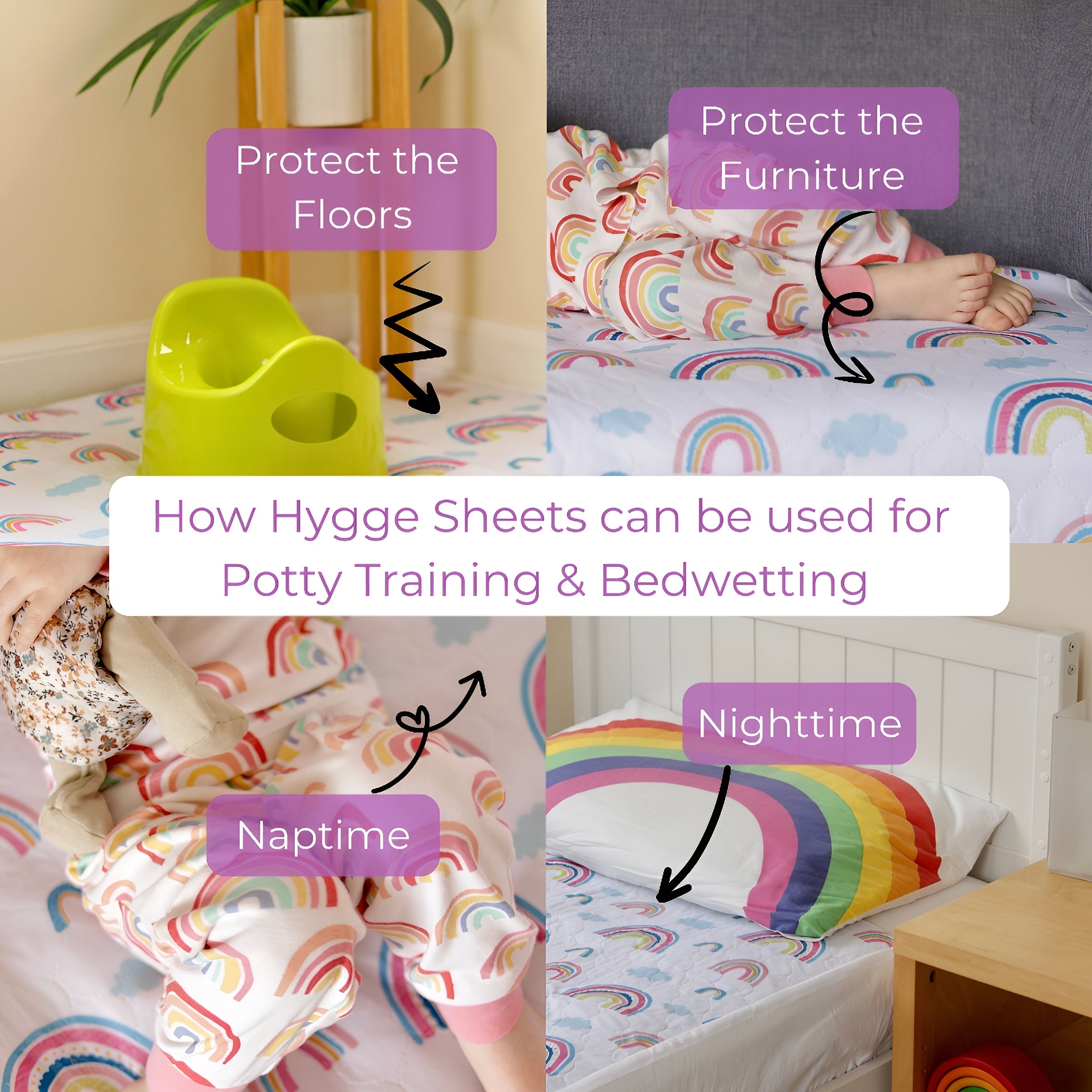
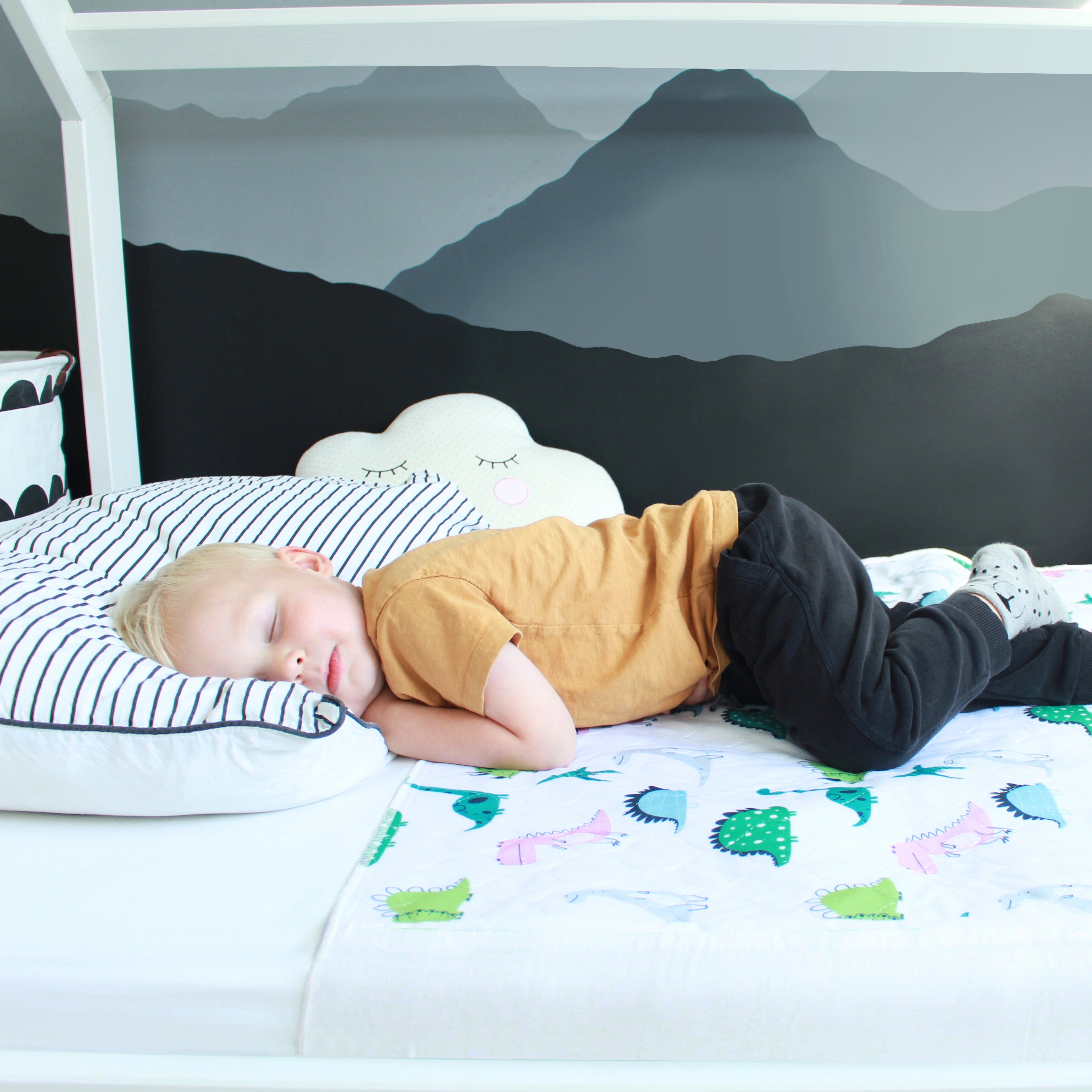
A waterproof mattress protector can be a great alternative to waking your child at night during potty training. Waterproof sheets provide bedwetting protection in the form of a soft, absorbent pad that your child can sleep directly on.
If they have an accident, the bed wetting sheets will catch the moisture, preventing leaks from reaching the mattress. You can quickly swap the soiled pad for a clean one without needing to fully strip the bed in the middle of the night.
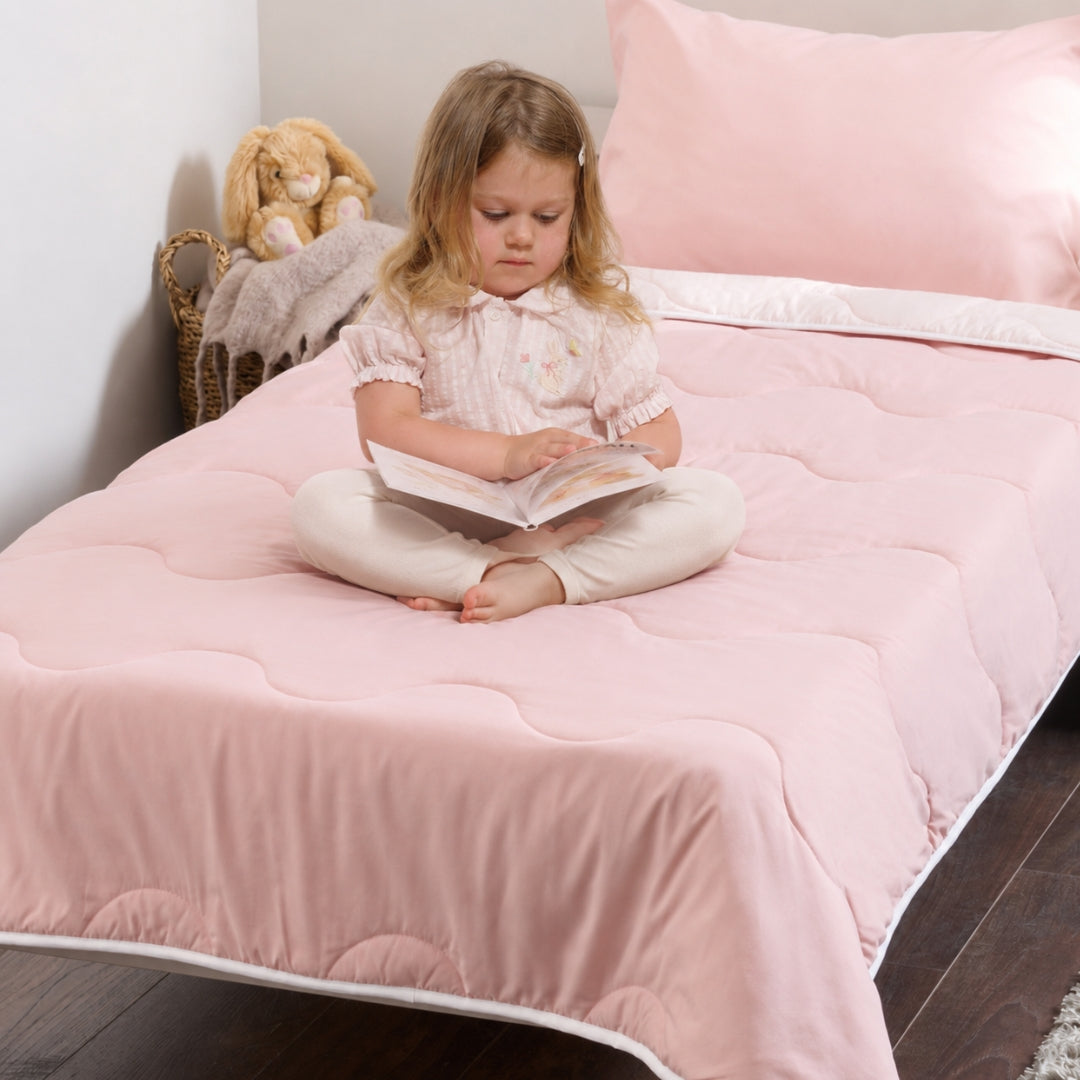
For even easier bed changes, consider pairing it with one of our coverless duvets. With a super-soft built-in cover, there's no separate duvet cover to remove and replace after an accident. The quick-wash, quick-dry design helps get the bed ready again faster, making those inevitable nighttime accidents much less disruptive.
Return to Using Nighttime Nappies or Pull-ups
It may simply be that your child isn’t ready to go without nighttime nappies yet. Nighttime dryness can take months or even years after daytime potty training because the body needs to develop the ability to stay dry overnight.
Key factors include:
- The production of hormones that reduce urine output at night
- The size of the bladder
- The ability to hold urine overnight
- The ability to wake up when the bladder is full
If your child isn’t ready, using pull-ups for a little longer can prevent unnecessary stress while they develop the necessary bladder control. You can also find additional helpful tips in our nighttime toilet training guide.
Try a Bedwetting Alarm
If your child is struggling to wake up when their bladder is full, a bedwetting alarm can help train them to recognise when they need to go. These alarms detect moisture and sound a gentle alert when an accident occurs, gradually teaching your child to wake up when they feel the urge to wee.
Get a Medical Check-up to Rule Out Underlying Health Issues
If your child is around 5 to 7 years or older and bedwetting persists, UK guidance still recommends checking for underlying causes.
A GP may assess for:
- Constipation (a very common contributor)
- Urinary tract infections (UTIs)
- Overproduction of urine at night
- Anxiety or stress factors
- Small functional bladder capacity
In the UK, NICE guidelines recommend that children over five can visit a GP for support with bedwetting. In some areas, a school nurse may also be available to help.
A medical professional can help pinpoint the cause of bedwetting so that you can tailor the right solution. For example, if constipation is a contributing factor, increasing fibre and water intake or using medication may help.
Additionally, some children may be eligible for referral to an enuresis (bedwetting) clinic, where they can receive specialist support. In some cases, doctors may prescribe medication to help reduce bedwetting frequency.
Final Thoughts
While waking your child at night may feel helpful in the short term, it does not usually support the long-term development of independent nighttime dryness. In fact, in some cases, it may delay this connection.
Instead focus on:
- Reducing stress for both parent and child
- Protecting sleep quality
- Supporting natural development
- Using tools like waterproof bedding, alarms, or pull-ups when needed
Every child develops at their own pace. With patience and the right support system, most will naturally reach nighttime dryness when their body is ready.