




























One of the biggest surprises for parents is discovering that daytime potty training and staying dry overnight are not linked in the way they expected. A child can confidently use the toilet during the day but some may still need protection at night for months or even years to come.
Although daytime and nighttime dryness are separate stages of development, they are still connected. Learning healthy daytime toilet habits, recognising the feeling of a full bladder, and developing confidence using the toilet all help lay the foundations for dry nights. However, staying dry overnight also relies on physical and hormonal changes that happen in their own time.
It’s easy to wonder whether something has been missed or whether more practice is needed, but the reality is that daytime potty training is a skill children learn, while nighttime dryness, in many cases, depends on physical and hormonal changes that happen when their body is ready.
Daytime Potty Training Is A Learned Skill
Daytime potty training is something children actively learn. It involves recognising the sensation of a full bladder or bowel, understanding what that feeling means, and then getting to the toilet in time.
With consistency, encouragement, and practice, most children gradually build these skills. Routines, rewards, and positive reinforcement can all help them feel confident and in control.
During the day, your child is awake, aware of their body, and able to respond to those signals. Nighttime, however, is a slightly different story. While a child still needs to be able to recognise when they need a wee or hold on until morning, they also need to do this while they are asleep.
Nighttime Dryness Is Mostly About Physical Development
Staying dry overnight is not something a child can simply "try harder" to do. While they sleep, several biological processes need to come together.
Firstly, the body needs to produce enough of a hormone called antidiuretic hormone (ADH), which slows down urine production during the night. Many younger children do not yet produce enough of this hormone, meaning their bladder fills more quickly while they sleep.
Secondly, the bladder itself needs to have enough capacity to hold urine until morning. As children grow, so does their bladder.
Finally, your child’s brain needs to be able to recognise that the bladder is full and either wake them up or help them "hold on" until morning. Deep sleepers may simply not respond to these signals yet.
These changes happen naturally over time and are largely outside of a child's control.
Watch: Can Daytime Bladder and Bowel Habits Cause Bedwetting at Night?
Many parents don't realise that what happens during the day can have a big impact on what happens overnight. Constipation, not fully emptying the bladder, or rushing toilet visits can all interfere with the normal communication between the brain and bladder, making bedwetting more likely.
In this video, Dr Caitlin Keller explains how constipation, incomplete bladder emptying, and hurried toilet habits can disrupt the brain-bladder connection and contribute to nighttime accidents. She also shares why building healthy daytime toilet habits is an important part of supporting dry nights.
It’s Normal For Nighttime Training To Take Longer
Many children achieve daytime dryness months or even years before they stay dry at night. In fact, bedwetting is incredibly common in younger children and often runs in families.
If one or both parents wet the bed as children, there’s a good chance their child may take a little longer to become dry overnight too.
Health professionals generally don't consider bedwetting to be a concern in younger children, as it is often part of normal development. However, if a child is aged 5 or 6 and continues to wet the bed regularly, especially if they are upset by it or it is affecting their confidence, it can be worth seeking advice. Sometimes underlying factors such as constipation, bladder issues, or other medical conditions may need to be investigated, and there are effective treatments and support available.
Watch: How Can I Help My Child to Be Dry at Night?
If you're wondering what practical steps you can take to support your child, this video offers some expert guidance. In this video, Sarah Timms, Head of Family Services and Support at ERIC, The Children's Bowel and Bladder Charity, discusses how you can help your child become dry at night.
Sarah shares simple, evidence-based advice, including why it's important to check for constipation and urinary tract infections (UTIs), how healthy daytime and bedtime habits can support bladder development, and ways to help your child relax their bladder before sleep.
Should You Start Nighttime Training?
Unlike daytime potty training, there isn’t much benefit in pushing nighttime training before your child’s body is ready, particularly if they are under the age of 5 or 6. Some signs they may be getting closer include:
- Waking up with a dry nappy for several mornings in a row.
- Staying dry during naps.
- Showing an interest in sleeping without a nappy.
- Waking up if they need the toilet during the night.
If these signs aren’t there yet, that’s okay. There’s no rush, and forcing the process can create unnecessary stress. However, if your child is over the age of 5 or 6 and bedwetting is continuing regularly, particularly if it is causing them distress, it’s a good idea to speak to your GP rather than simply waiting for them to grow out of it.
Practical Tips For Managing Bedwetting
While you wait for your child’s body to be ready, there are a few simple things that can make life easier:
- Encourage regular toilet trips during the day and before bedtime.
- Make sure your child stays well hydrated throughout the day rather than restricting drinks.
- Keep a calm attitude about accidents.
- Have spare pyjamas and bedding ready for easy nighttime changes.
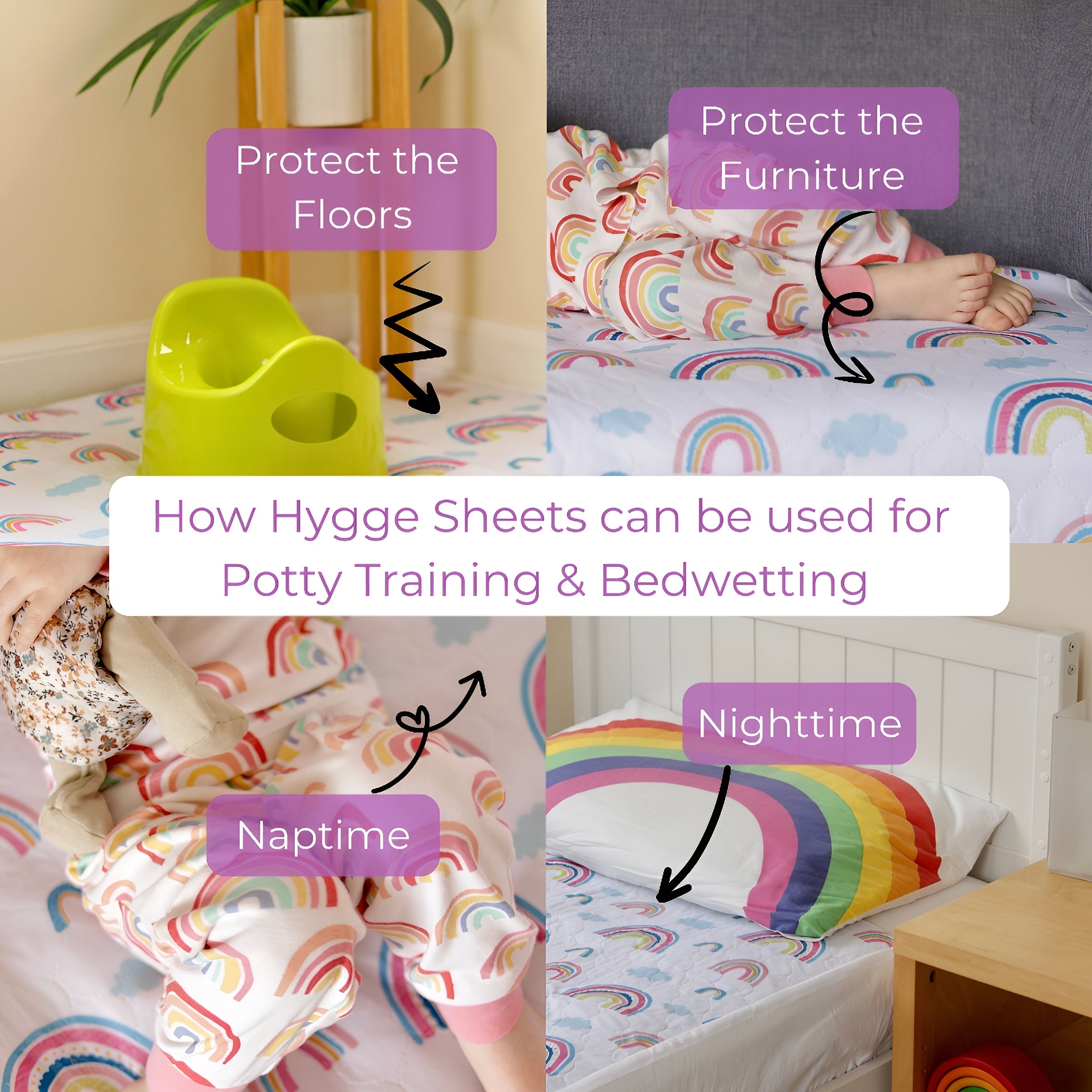
- Use a high-quality waterproof sheet or coverless duvet to protect the mattress and make changing the bed quick and simple.
Most importantly, avoid blame or punishment. Bedwetting is not a sign that your child is being lazy or naughty; it’s a normal stage of development.
Be Patient, But Don't Ignore Ongoing Bedwetting
It can be frustrating when daytime potty training seems like a huge success but wet nights continue. However, it’s important to remember that these are two separate achievements.
Day potty training is about learning a new skill. Nighttime dryness is about the body and brain maturing at their own pace. One can’t be rushed, and every child reaches this stage at a different time.
Until then, a little patience, plenty of encouragement, and some practical bedtime protection can help make the journey much less stressful for the whole family. At the same time, if your child is older and bedwetting is continuing or causing concern, remember that you do not have to simply wait it out. Advice, assessment, and effective support are available, and seeking help can make a real difference.